What Star Trek Can Teach Today's Business Leaders
Star Trek isn't just science fiction — it's a masterclass in organisational leadership. From Picard's culture-setting to the Federation's risk governance framework, here are seven leadership lessons that translate directly to the modern enterprise.
Series: Leadership, Post #8
Sci-FiThis post includes a Leadership Brief — an exclusive extended version.
What Star Trek Can Teach Today’s Business Leaders
Boldly Going Where Good Management Theory Already Lives
There is a peculiar thing that happens when you rewatch Star Trek as an adult working in enterprise services. Suddenly, every bridge scene looks less like science fiction and more like a post-incident review. Every away mission starts to resemble a poorly scoped change request. And Captain Picard’s ability to remain calm whilst Starfleet Command breathes down his neck feels less fantastical and less like something you can only achieve in the 24th century.
Star Trek, across its many iterations, is fundamentally a story about organisations under pressure — and how the quality of leadership determines whether they endure or fall apart. Having spent the better part of 25 years working across complex service environments, I have come to believe that the Federation’s leadership model contains more practical wisdom than most business books you will find on an airport bookshelf. Here is a look at what it actually teaches us.
1. The Captain Sets the Culture — Not the Policy
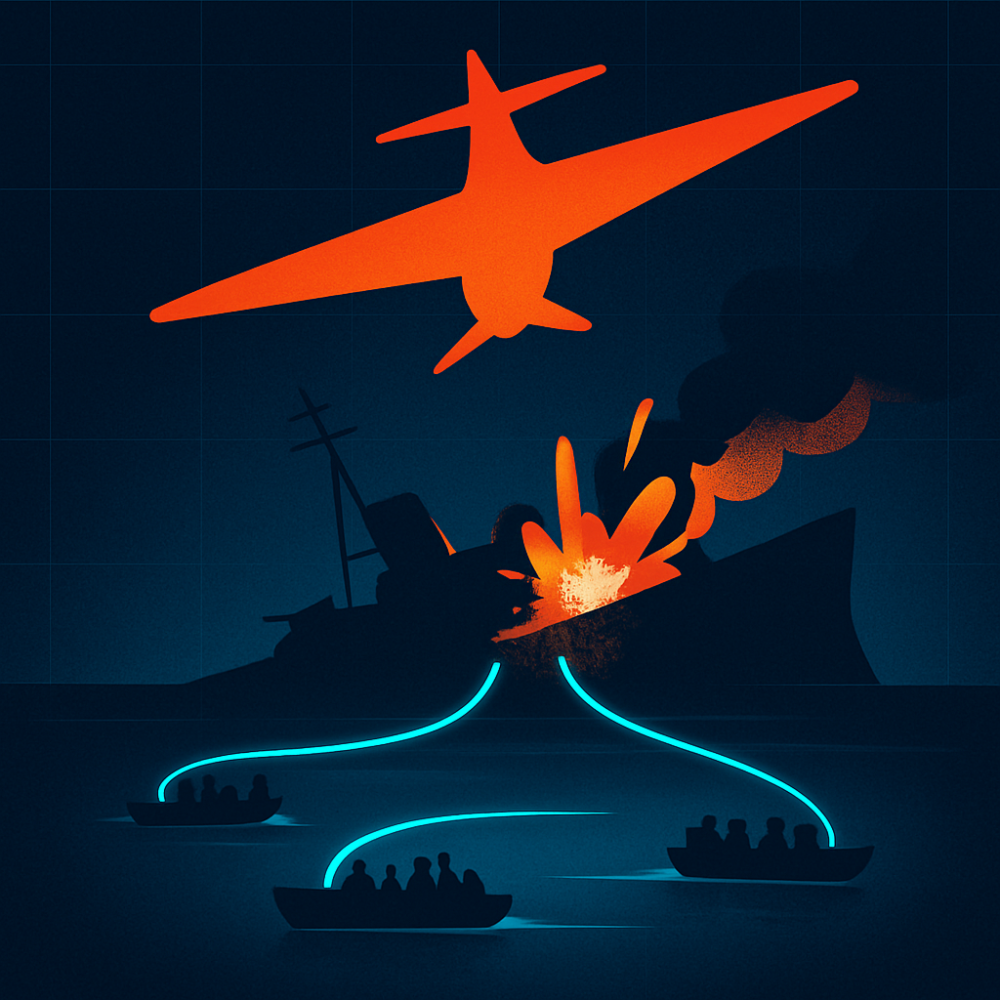
“It is possible to commit no mistakes and still lose. That is not a weakness. That is life.” — Jean-Luc Picard, Star Trek: The Next Generation
One of the most striking things about Captain Picard is that the Enterprise crew does not behave the way they do because of a rulebook. They behave that way because Picard himself embodies the values he expects of others — curiosity, integrity, diplomacy, decisiveness. He does not merely enforce the Prime Directive; he believes in it.
This matters enormously in business. Organisational culture is almost always a downstream consequence of leadership behaviour. Leaders who say “we value transparency” but punish the bearer of bad news create cultures of silence. Leaders who talk about psychological safety but visibly dismiss challenge in meetings create compliance theatre.
- Model the behaviour first. Your team takes its cues from your reactions under pressure, not from your town hall slides.
- Be consistent. Picard’s officers trust him because he is the same person in a crisis as he is at a diplomatic dinner. Consistency is the foundation of psychological safety.
- Own the culture actively. Kirk, Janeway, Sisko — each captain shaped a distinctly different ship culture. That was not accidental. Neither should yours be.
2. Build a Bridge Crew, Not a Cabinet of Yes-People
The Enterprise senior staff is a deliberately assembled collection of complementary tensions. Spock brings logic; McCoy brings humanity. Data brings precision; Troi brings empathy. These characters do not agree with each other — and that is entirely the point. Picard does not surround himself with people who confirm his instincts. He surrounds himself with people who challenge them from a place of shared purpose.
Compare this to the classic failure mode of executive teams: the echo chamber. When every voice around the table reflects the leader’s worldview back at them, the organisation loses its immune system. Problems go undetected. Blind spots become organisational blind spots.
- Actively recruit for cognitive diversity. If everyone on your leadership team has the same background and the same instincts, you have a problem.
- Make it safe to disagree. Picard consistently invites challenge. “What do you think, Number One?” is not a formality — it is a genuine request for input.
- Distinguish between debate and decision. The Enterprise debates rigorously, then the captain decides and the crew executes. The debate phase is not endless.
In my experience, the leaders who build the strongest teams are those who are genuinely comfortable being the least expert person in the room on any given topic.
3. The Prime Directive Is a Risk Framework in Disguise
The Prime Directive — Starfleet’s principle of non-interference in developing civilisations — is frequently the source of dramatic tension in the series. It is inconvenient. It creates dilemmas. It sometimes means standing by when intervention feels obviously correct.
And yet the Federation upholds it, because the alternative — making contextual exceptions every time intervention feels justified — leads to paternalism, unintended consequences, and mission drift at scale.
Sound familiar? It should. This is precisely the tension that plays out in governance frameworks, risk management, and change control processes every day.
- Governance exists because individual judgement, however well-intentioned, does not scale. The Prime Directive is not a bureaucratic obstruction — it is accumulated institutional wisdom about where unchecked discretion leads.
- But rules without judgement are also dangerous. Kirk famously bends the Prime Directive when lives are at stake — and the show invites us to wrestle with whether he is right. Good risk management requires the same nuance.
- Create clear escalation paths. The Federation does not say “break the rules if you feel like it.” It says “escalate to Command.” That distinction matters enormously in enterprise governance.
4. Diversity of Perspective Is a Strategic Advantage
By the time Deep Space Nine and Voyager aired, Star Trek had spent decades normalising the radical idea that the most effective crews are the most diverse ones — not as a gesture, but as a genuine operational necessity. Worf brings tactical instincts Starfleet Academy does not teach. Odo brings an outsider’s scepticism that cuts through complacency. Seven of Nine brings Borg efficiency that forces Voyager’s crew to question their own assumptions.
The business case for diversity has been made many times over by research. Star Trek simply dramatises it: a crew that all thinks alike will be blindsided by problems that a more varied crew would have anticipated.
- Diversity of experience matters as much as demographic diversity. Someone who has worked through a company failure sees risk differently to someone who has only ever operated in growth environments.
- Create the conditions for diverse voices to actually be heard. A diverse team that self-censors in meetings is no more effective than a homogeneous one.
- Value the outsider perspective. Some of the most valuable strategic insight I have encountered in my career has come from people who were new to the environment and not yet captured by “the way we do things here.”
5. Crisis Leadership Is a Learnable Skill — Not a Personality Type
Across every series, the captains face moments of catastrophic uncertainty. What distinguishes their responses is not superhuman confidence — it is structured composure. They gather information. They consult their crew. They make a decision with imperfect data. They communicate clearly. They adapt.
This is not heroism. It is method.
The myth of the “born leader” who instinctively knows what to do in a crisis is one of the most harmful ideas in management culture. What actually works is:
- Situation awareness first. Before deciding anything, Picard typically asks “what do we know?” rather than immediately issuing orders. This is not hesitation — it is discipline.
- Transparent communication under pressure. Janeway keeps her crew informed even when the news is bad. This builds trust and prevents the rumour mill from filling the information vacuum.
- Decision-making with bounded uncertainty. Waiting for perfect information is not an option on the bridge of a starship, and it is rarely an option in business either. Learn to make defensible decisions with what you have.
- Debrief and learn. The holodeck simulations, the mission reviews — the Federation institutionalises learning from both success and failure. Your post-incident reviews and retrospectives serve the same function.
6. Long-Term Mission Over Short-Term Wins
The Federation is not optimised for quarterly returns. Its mission — “to explore strange new worlds, to seek out new life and new civilisations” — is deliberately long-horizon. This shapes how its leaders think about trade-offs. A decision that would secure a short-term tactical advantage but compromise Federation values is typically the wrong call, even if it is the expedient one.
This stands in stark contrast to much of modern organisational behaviour, where short-term metrics routinely crowd out longer-term strategic thinking.
- Know your actual mission. Not your mission statement — your real one. What is the thing you are genuinely trying to build or achieve, over what timeframe?
- Resist the pull of the proximate. Reacting to what is urgent at the expense of what is important is how organisations drift from their purpose.
- Make your values load-bearing. Federation values are not decorative. They are tested under pressure — and the test is whether they hold. The same should be true of yours.
7. Technology Serves the Mission — It Does Not Define It
Star Trek features some of the most extraordinary technology ever imagined — warp drives, replicators, transporters, holodecks. And yet the show consistently subordinates technology to human (and non-human) purpose. The Enterprise is remarkable not because of its engines, but because of what its crew does with them.
This is a lesson the technology industry has periodically forgotten. The adoption of a new platform, tool, or AI capability is not itself a strategic outcome. The question is always: what problem does this solve, and for whom?
- Technology should amplify capability, not substitute for strategy. A well-implemented AI tool in a poorly designed service operation will give you better data about a broken process. That is not the same as fixing it.
- Change management is always the hardest part. The Federation does not hand its crew a tricorder and assume they know what to do with it. Training, context, and purpose matter.
- Keep the human in the loop. For all of Data’s computational superiority, Picard values his counsel rather than simply delegating command decisions to him. That relationship between human judgement and machine capability is one the 21st century is still working out.
Conclusion
Star Trek endures not because it imagines a utopian future, but because it takes seriously the question of how we get there — through the quality of our institutions, the character of our leaders, and the values we choose to hold when they are inconvenient. These are not 24th-century concerns. They are the concerns of every organisation navigating complexity right now.
The bridge of the Enterprise is, at its core, a masterclass in service leadership: diverse in composition, clear in mission, disciplined in process, and deeply human in its approach to uncertainty. If your leadership team were a starship crew, it is worth asking — what kind of crew would they be?
Hopefully this has given you a few ideas to take back to your own bridge. Live long and prosper.
Steven Godson is a Lead Service Architect with over 25 years of experience in IT service management, transformation, and enterprise architecture. He writes about ITSM, AI, leadership, and professional development at stevengodson.com.
What Star Trek Can Teach Today’s Business Leaders
What one line from Picard reveals about leading when you have done everything right and still lost
There is a moment in The Next Generation when Captain Picard, having just lost something he cared about despite doing everything correctly, turns to a younger officer who is struggling to understand how that is possible, and offers what is probably the most useful sentence in the entire franchise. It is possible, he tells her, to commit no mistakes and still lose — and that this is not a weakness, but simply life.
I have thought about that line more than I would care to admit, usually in the aftermath of a programme that was well-run, well-staffed, well-intentioned, and still did not land the way it should have. Because the instinct, when something goes wrong, is to assume that someone erred — that loss is always the consequence of a mistake, and that if we can just find the mistake we can restore the comforting sense that the world rewards competence. Picard is telling his officer, and us, that this is a child’s model of reality. Good decisions can produce bad outcomes. You can do the work, make the right calls with the information available, conduct yourself with integrity throughout, and still lose — and a leader who cannot absorb that truth will either become reckless in the search for guarantees that do not exist or paralysed by the fear of an error they did not actually commit. The mark of a serious leader is the ability to distinguish a bad decision from a bad outcome, and to keep making good decisions in a universe that does not promise to reward them.
That is a more adult philosophy of leadership than most business books manage, and it is characteristic of why Star Trek, across its many iterations, repays attention from anyone who actually leads people. Rewatch it as an adult working in complex organisations and the bridge stops looking like science fiction and starts looking uncomfortably like a post-incident review: every away mission a poorly scoped change request, every encounter with Starfleet Command a study in managing upward under pressure. Beneath the warp drives and the universal translators, the franchise is fundamentally a story about institutions under strain, and about how the quality of leadership determines whether they endure or come apart. Having spent the better part of twenty-five years in service environments, I have come to believe the Federation’s leadership model holds more practical wisdom than most of what you will find on an airport bookshelf — and Picard’s hard little truth about losing is the right place to begin, because everything else the captains teach is, in one way or another, about how to lead well when good conduct is not enough to guarantee good results.
Start with the thing Picard never has to enforce, because it reveals how culture actually forms. The Enterprise crew does not behave as it does because of a rulebook; it behaves that way because Picard himself embodies the values he expects — curiosity, integrity, diplomacy, decisiveness. He does not merely enforce the Prime Directive, the principle of non-interference; he visibly believes in it, and the crew takes its real cues from that belief rather than from any standing order. This matters enormously, because organisational culture is almost always downstream of leadership behaviour rather than leadership rhetoric. The leader who declares that the organisation “values transparency” and then visibly punishes the person who brings bad news has not created a transparent culture; they have created a culture of careful silence, and the staff have learned the actual rule, which is to keep quiet. What works is the harder thing: modelling the behaviour first, because your people read your reactions under pressure far more attentively than your town-hall slides, and being consistent enough that they can predict you. Picard’s officers trust him in part because he is recognisably the same man in a crisis as at a diplomatic dinner, and that consistency is the bedrock of psychological safety — you cannot feel safe around someone whose response to you depends on their mood. Kirk, Janeway and Sisko each shaped a distinctly different ship culture, and none of it was accidental. Neither, the franchise quietly insists, should yours be.
The composition of Picard’s senior staff teaches the next lesson, and it runs directly against the gravitational pull of every executive team. The bridge crew is a deliberately assembled collection of complementary tensions: Spock brings logic and McCoy brings humanity, Data brings precision and Troi brings empathy, and the point is that these people do not simply agree with one another. Picard does not surround himself with officers who reflect his own instincts back at him; he surrounds himself with people who challenge those instincts from a place of shared purpose, and “What do you think, Number One?” is a genuine request for input rather than a formality. Compare that to the classic failure mode of leadership teams — the echo chamber, where every voice around the table confirms the leader’s worldview, and the organisation slowly loses its immune system. Problems go undetected because the people who would have flagged them have learned that flagging is unwelcome; blind spots at the top become blind spots for the whole enterprise. The corrective is to recruit deliberately for cognitive diversity, to make it genuinely safe to disagree, and — this is the part teams get wrong in the other direction — to distinguish clearly between the debate phase and the decision phase. The Enterprise argues rigorously and then the captain decides and the crew executes; the debate is real but it is not endless, and the commitment after the decision is total. In my experience, the leaders who build the strongest teams are precisely those who are comfortable being the least expert person in the room on any given topic, because only that comfort makes the challenge welcome rather than threatening.
The Prime Directive itself, so often the engine of dramatic tension, turns out on reflection to be the most sophisticated single idea the franchise offers leaders, because it is a risk and governance framework dressed up as a moral principle. It is inconvenient. It creates genuine dilemmas, and it sometimes requires standing by when intervention feels obviously, achingly correct. And yet the Federation upholds it, because the alternative — making a contextual exception every single time intervention feels justified — leads inexorably to paternalism, unintended consequences, and mission drift at scale. This is exactly the tension that plays out in real governance and change-control every day, and the Directive holds two truths in balance that most organisations manage to get wrong one at a time. The first is that governance exists because individual judgement, however well-intentioned, does not scale — the Directive is not bureaucratic obstruction but accumulated institutional wisdom about where unchecked discretion eventually leads. The second is that rules without judgement are themselves dangerous, which is why Kirk famously bends the Directive when lives hang in the balance and the show invites us to wrestle with whether he is right. The resolution is the crucial detail: the Federation does not say “break the rules whenever you feel like it.” It says “escalate to Command.” It provides a clear path for the exception, and that distinction — between unchecked discretion and a governed escape valve — is the difference between mature risk management and either rigid box-ticking or cowboy improvisation.
The crisis episodes, of which there are many, dismantle one of the most harmful myths in management culture: the idea that crisis leadership is a personality type, that some people are simply born knowing what to do when everything is on fire. Watch what the captains actually do under catastrophic uncertainty and you find not superhuman confidence but structured composure — a method, repeated across every series. Before deciding anything, Picard characteristically asks “what do we know?” rather than immediately issuing orders, and that is not hesitation but discipline, the deliberate establishment of situational awareness before action. Janeway, stranded on the far side of the galaxy, keeps her crew informed even when the news is bad, because transparent communication under pressure builds trust and prevents the rumour mill from rushing in to fill the vacuum that silence creates. They make decisions with bounded uncertainty, because waiting for perfect information is not an option on the bridge of a starship any more than it is in business. And afterwards they debrief — the mission reviews, the holodeck reconstructions — because the Federation institutionalises learning from both success and failure in exactly the way your post-incident reviews and retrospectives are meant to. The reassuring implication is that none of this is heroism. It is method, and method can be learned, which means crisis leadership is a capability you can build in your people rather than a trait you can only hope they happened to be born with.
There is a temporal discipline running through the whole franchise that sets it against most of modern organisational behaviour. The Federation is conspicuously not optimised for quarterly returns; its mission — to explore, to seek out new life and new civilisations — is deliberately long-horizon, and that shapes how its leaders weigh trade-offs. A choice that would secure a short-term tactical advantage but compromise Federation values is consistently treated as the wrong call even when it is the expedient one, because the values are load-bearing rather than decorative — they are tested under pressure, and the test is whether they hold. This stands in sharp contrast to organisations where short-term metrics routinely crowd out longer-term strategic thinking, and the lesson is to know your actual mission rather than your mission statement, to resist the constant pull of the proximate and urgent at the expense of the important, and to make your values genuinely load-bearing — to treat them as constraints that bind even when binding is costly, which is the only condition under which anyone believes them.
The franchise closes its argument with a lesson the technology industry in particular keeps having to relearn: that technology serves the mission and does not define it. Star Trek imagines some of the most extraordinary technology ever conceived — warp drives, replicators, transporters, holodecks — and then consistently subordinates all of it to human and non-human purpose. The Enterprise is remarkable not because of its engines but because of what its crew does with them, and the show never once mistakes a capability for an outcome. This is the trap the technology sector falls into whenever it forgets that adopting a new platform or tool or AI capability is not itself a strategic achievement; the only question that matters is what problem it solves, and for whom. A well-implemented AI tool dropped into a poorly designed service operation gives you better data about a broken process, which is emphatically not the same as fixing it. Change management is always the hardest part — the Federation does not hand its crew a tricorder and assume mastery follows; training, context and purpose all matter — and the human stays in the loop by design, because for all of Data’s computational superiority, Picard values his counsel rather than simply delegating command decisions to him. That relationship between human judgement and machine capability is one the twenty-first century is still, visibly, working out.
Which brings me back to Picard’s line about losing, because it is really a statement about what leadership is for in an uncertain universe. If you could guarantee outcomes by following a process, leadership would be administration, and you could automate it. The reason leadership matters — the reason character matters, and culture, and the courage to decide without certainty — is precisely that you cannot guarantee outcomes, that you can do everything right and still lose, and that someone has to hold the institution steady and keep making good decisions anyway. That is the job. Not to eliminate the possibility of loss, which is impossible, but to lead well in full knowledge of it.
Conclusion
Star Trek endures not because it imagines a utopian future but because it takes seriously the question of how we might get there — through the quality of our institutions, the character of our leaders, and the values we choose to hold precisely when they are inconvenient. These are not twenty-fourth-century concerns; they are the concerns of every organisation navigating complexity right now. The bridge of the Enterprise is, at its core, a masterclass in service leadership: diverse in composition, clear in mission, disciplined in process, and deeply human in its approach to uncertainty — led by people who understand that you can do everything right and still lose, and that leading well anyway is the entire point. If your leadership team were a starship crew, it is worth asking what kind of crew they would be. Hopefully this has given you a few ideas to take back to your own bridge. Live long and prosper.
Steven Godson is a Lead Service Architect with over 25 years of experience in IT service management, transformation, and enterprise architecture. He writes about ITSM, AI, leadership, and professional development at stevengodson.com.